By Rabia Tingat
•
October 3, 2026
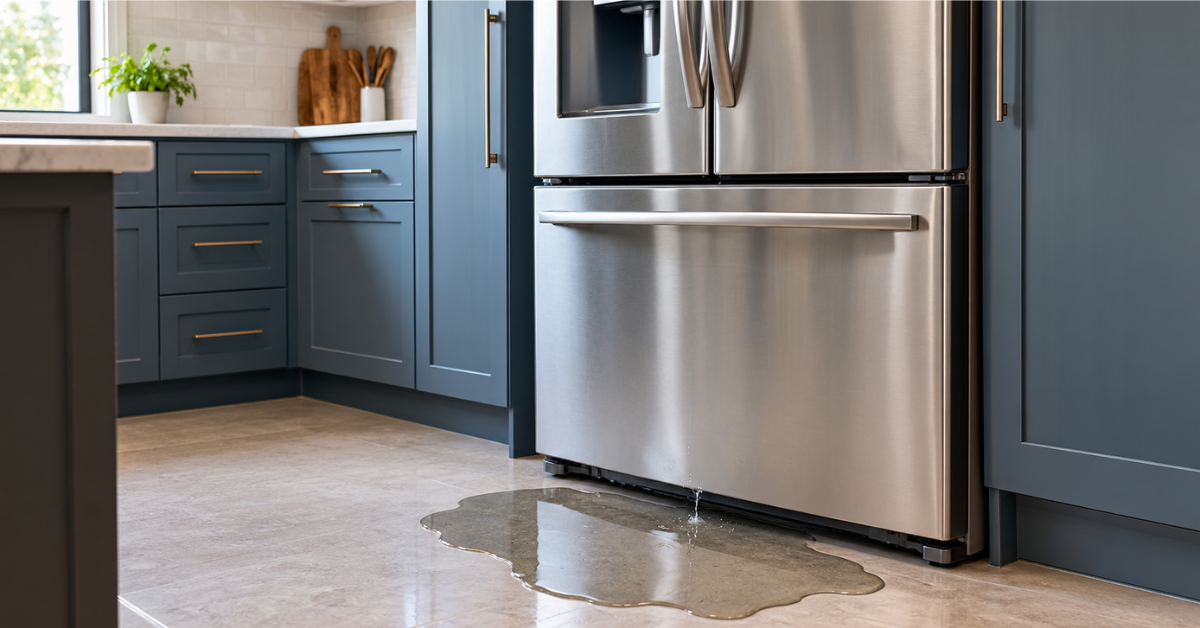
You walk into the kitchen in your socks and feel something wet under your feet. There's a small puddle spreading out from under the refrigerator. Or maybe you open the crisper drawer to grab some vegetables and find water sitting at the bottom, right where everything should be dry. Either way, your stomach drops a little. Water on the floor feels like a big problem, even before you know what's causing it. Here's the reassuring part. A Sub-Zero isn't like an ordinary fridge. It's built to control humidity carefully and to cool the fridge and freezer separately, and that gives a leak only a few places to come from. It might be a clogged drain, a blocked water line, a problem with the ice maker, or a part that has frozen over and is now melting. In most cases it's not a mystery at all. The hardest part is finding out where the water is actually coming from, and that's what this guide will help you do. We'll go through the most common causes, what you can safely check yourself, and when it makes sense to call a technician instead. Start by Locating Where the Water Is Actually Appearing This matters more than it might seem. Water pooling inside the unit, especially in the crisper drawers, points toward a different cause than water appearing on the floor outside the refrigerator. Take a moment to identify the source location before assuming you know what's wrong, since it meaningfully changes where to look next. Water Inside the Refrigerator, Especially in Crisper Drawers A clogged or frozen defrost drain. This is one of the most common sources of interior water accumulation. Sub-Zero units periodically defrost automatically, and the resulting water is meant to drain away through a small channel. When that drain becomes blocked by food debris or freezes over, water backs up and pools inside the unit instead of draining properly. Humidity control settings that are too high for what's stored. Sub-Zero's precise humidity management is a genuine advantage for food preservation, but settings that are too high for certain produce can occasionally lead to excess condensation inside drawers, less a malfunction than a setting worth adjusting based on what you're actually storing. How Much Does Appliance Repair Cost in 2026? Water Pooling on the Floor Outside the Unit An overflowing or misaligned drain pan. Refrigerators use a small drain pan, usually located near the bottom of the unit, to collect and evaporate condensation and defrost water. If this pan has shifted out of position, cracked, or is receiving more water than it can handle due to another issue upstream, it can overflow onto the floor. A water supply line connection issue, on models with an ice maker or water dispenser. The line delivering water to these features runs from your home's water supply to the refrigerator, and a loose fitting, a small crack, or a connection that's degraded over time can produce a slow leak that's sometimes mistaken for condensation until it's traced back to its actual source. Condensation from door seal issues. A door that isn't sealing fully allows warm, humid air to continuously meet the cold interior, and the resulting condensation can, in some cases, be significant enough to drip and pool near the base of the unit rather than staying contained inside. A Detail Specific to Sub-Zero's Built-In Installation Because Sub-Zero units are frequently installed as built-ins, flush with surrounding cabinetry, a water leak has less room to spread out and evaporate on its own compared to a freestanding refrigerator with more open floor space around it. This means leaks are often noticed faster, but it also means water can potentially affect surrounding cabinetry or flooring more directly if it isn't addressed promptly, worth keeping in mind when deciding how quickly to act. How Often Should You Service a Sub-Zero Refrigerator? (Maintenance Guide) Checking the Ice Maker Specifically If your Sub-Zero includes a built-in ice maker, it's worth checking whether the leak coincides with ice production cycles. A water leak that seems to happen specifically around when the ice maker runs points more directly toward the water supply line or the ice maker's own internal components, rather than the broader defrost or drainage system. What You Can Check Before Calling a Technician Identify exactly where the water is appearing, inside the unit versus on the floor outside Check whether interior pooling coincides with drawers specifically, suggesting a defrost drain issue Look for visible dampness or dripping around the water line connection if your model has an ice maker or dispenser Inspect the door seal for gaps that could be contributing to excess condensation Note whether the leak seems tied to specific events, defrost cycles, ice production, or seems constant Why This Isn't Always a DIY Fix While identifying the general source is often manageable on your own, actually clearing a frozen or clogged defrost drain, repositioning a drain pan, or repairing a water line connection typically involves accessing components that aren't designed for regular homeowner access. Sub-Zero's sealed system design, part of what makes it perform so well, also means these repairs benefit from someone familiar with the specific platform. Getting a Reliable Repair Sub-Zero's precision cooling and humidity systems are different enough from standard refrigerators that experience with the brand specifically matters for an accurate diagnosis. Authorized Appliance's technicians come equipped with the diagnostic tools and commonly needed parts for premium built-in refrigerators, which helps keep most repair visits, including leak-related ones, to a single appointment. Frequently Asked Questions Q: Is a small amount of water inside the crisper drawers always a problem? A: A small amount of condensation can be normal depending on humidity settings and what's stored, but noticeable pooling usually points to a drain or humidity setting issue worth addressing. Q: Can a water leak damage my cabinetry if my Sub-Zero is built in? A: Yes, built-in installations have less room for water to spread and evaporate, so surrounding cabinetry and flooring can be affected if a leak isn't addressed promptly. Q: How do I know if the leak is coming from the ice maker or somewhere else? A: Pay attention to timing, if the leak seems to happen specifically around ice production cycles, it's more likely related to the water supply line or ice maker rather than the general drainage system. Q: Can I clear a clogged defrost drain myself? A: It's possible on some models, but the drain is often not easily accessible without proper knowledge of the unit's layout, and a technician can typically clear it more quickly and confirm nothing else is contributing to the issue. A Final Note A water leak on a Sub-Zero refrigerator almost always has an identifiable source once you know where to look, and pinpointing exactly where the water is appearing does most of the diagnostic work before a technician ever arrives. Given how much more contained a leak is in a built-in installation, it's worth addressing promptly rather than waiting to see if it resolves on its own.