
Freezer Not Freezing Properly: What to Check First
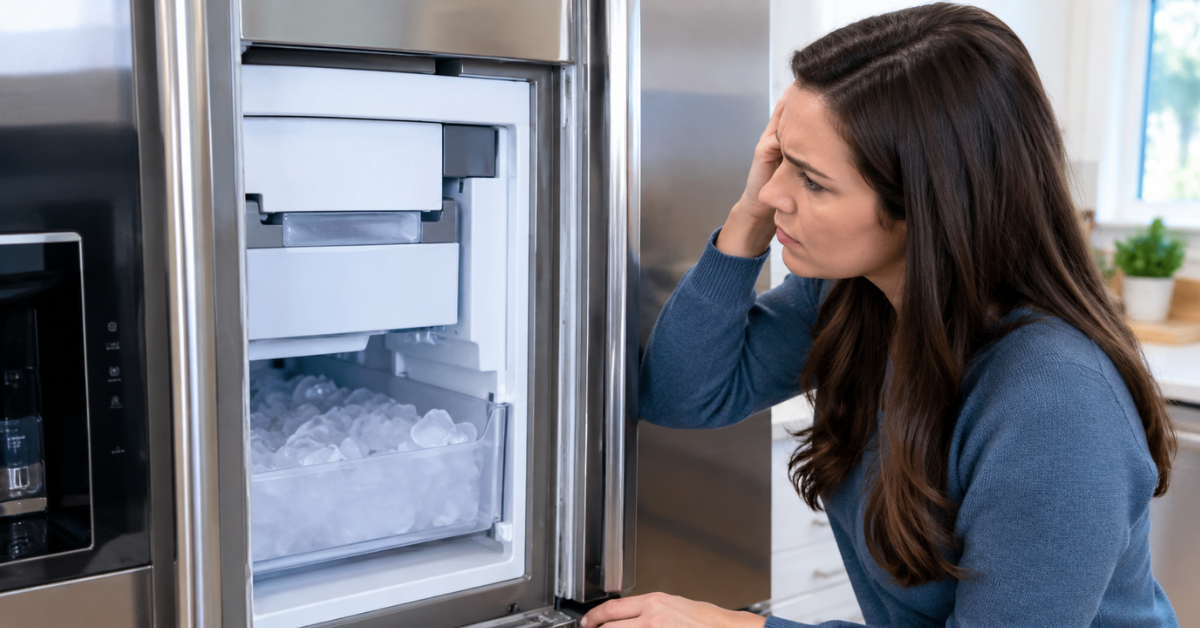
A freezer that's running but not actually freezing is one of the more confusing appliance problems, because everything looks normal on the surface — you can hear it humming, the light comes on, and nothing seems obviously broken. But if ice cream is softening or food isn't staying solidly frozen, something in the system isn't doing its job. Here's what to check, roughly in order from simplest to most involved.
Check the Temperature Setting First
It's an easy thing to overlook, but an incorrect temperature setting is one of the most common reasons a freezer isn't freezing properly, especially in busy households where thermostats sometimes get bumped by accident.
Freezers should be set to 0°F to keep food properly frozen. Check your control settings and, if you have a separate thermometer, verify the actual temperature matches what the dial or display says. If it's set correctly but the freezer still isn't cold enough, that points to a different cause further down this list.
Make Sure the Door Is Sealing Properly
A freezer door that isn't fully sealing lets cold air escape continuously, forcing the unit to work harder while never quite catching up.
Start by checking for anything blocking the door from closing all the way — a bag or container pressed against it is a surprisingly common cause. Then inspect the door gasket itself for cracks, warping, or residue that prevents a tight seal. A simple way to test it: close a dollar bill or a piece of paper in the door, then try to pull it out. If it slides out easily with little resistance, the seal isn't gripping the way it should and likely needs cleaning or replacement.
Is It Worth Repairing an Appliance Under Warranty? What to Know
Avoid Overpacking the Freezer
Cold air needs to circulate freely for a freezer to maintain its temperature, and a freezer packed too tightly can block that airflow, particularly around the evaporator fan.
If a bag of vegetables or a large container is sitting directly against the fan or vents, it can restrict circulation enough to leave parts of the freezer noticeably warmer than others. Rearranging or removing a few items to restore airflow is often enough to fix this on its own, with no parts or repairs involved.
Look for Frost Buildup on the Evaporator Coils
If the freezer feels cold in general but food still isn't staying solidly frozen, frost buildup on the evaporator coils is a common cause.
These coils are usually located behind an interior back panel, and when frost accumulates on them, it blocks airflow the same way a clogged filter blocks water flow. This is often tied to a failing defrost system — if the defrost heater, thermostat, or timer isn't working correctly, frost keeps building instead of being periodically cleared. A freezer that frosts over repeatedly within a short period after being cleared is a strong sign the defrost system itself needs repair, not just a manual defrost.
Check the Venting for Blockages
Similar to the evaporator coils, the venting at the back or bottom of the freezer needs to stay clear for air to move properly between compartments. If food packages are resting directly against the vents, it can restrict airflow enough to affect freezing performance, even when everything else is working correctly. A quick visual check and rearranging anything blocking the vents is worth doing before assuming a mechanical part has failed.
Clean the Condenser Coils
On refrigerator-freezer combination units, the condenser coils, usually located at the back or underneath the appliance, release heat as part of the cooling cycle. When they're covered in dust and pet hair, the whole system loses cooling efficiency, which often shows up first as a freezer that isn't quite cold enough rather than a complete failure.
Vacuuming the coils with a crevice attachment every few months is a simple maintenance step that can restore lost cooling capacity. On standalone upright or chest freezers, the coils are usually built into the interior walls rather than exposed, so this typically isn't a DIY-accessible fix on those models.
Listen for the Compressor
The compressor is what drives the entire cooling cycle, and a healthy one produces a routine, steady humming sound as it runs.
Listen for that hum over a 30-minute period. If you don't hear it at all, or the sound is unusual — clicking, buzzing, or straining — the compressor may be struggling or failing. This is one of the more serious potential causes and isn't something to test or repair on your own, since it involves the sealed refrigeration system.
Test the Thermostat
If the temperature setting looks correct and there's no obvious frost or airflow blockage, the thermostat itself may not be regulating the cooling cycle properly.
One way to get a sense of this is by tracking the temperature over a few days. If it swings widely, or the freezer consistently runs warmer than the thermostat display suggests, the thermostat is a likely suspect. Some models let you test this by adjusting from the lowest to the highest setting and listening for a click; no click generally points to a thermostat that needs professional replacement.
Don't Ignore Chest Freezers
Chest freezers run into most of the same issues as upright models, so it's worth checking the same list: temperature settings, the compressor, condenser coils, the evaporator fan, and the defrost temperature sensor. The one difference is the lid gasket rather than a door seal. If part of it is broken, worn, or no longer forming a tight seal, the entire gasket typically needs to be replaced rather than patched.
When to Call a Technician
If you've checked the temperature setting, cleared any airflow blockages, inspected the door or lid seal, cleaned the condenser coils, and the compressor sounds like it's running normally, but the freezer still isn't holding a proper temperature, the cause is likely a failing defrost system, a malfunctioning thermostat, a worn evaporator fan motor, or a compressor issue. These require testing with the right tools and OEM replacement parts to diagnose accurately.
At Authorized Appliance, we connect you with factory-authorized technicians for major refrigerator and freezer brands, including Whirlpool, Samsung, LG, Maytag, Kenmore, Sub-Zero, and Viking. Our technicians identify exactly what's keeping your freezer from freezing properly and repair it with manufacturer-approved parts, so it holds.
Call (833) 220-1666 or contact us online to schedule a diagnostic before more food is lost to a freezer that isn't doing its job.
You might also like
Educational Center