
Why Is Your Appliance Using So Much Energy?
You open your electric bill and wince. It's higher than last month, and nothing in your routine has changed. You haven't added any new appliances or run more laundry. So where is the extra power going?
Often, it's going to one of your appliances. An appliance that's wearing out, clogged, or poorly set up can quietly use far more energy than it should. And because many appliances run for hours every day, small problems add up.
This guide follows the power. We'll go through your major appliances one by one and show what makes each one waste energy. You'll also learn a simple way to measure usage. If one of your appliances is acting up, our appliance repair services can connect you with a local contractor.
First, Find the Culprit
Before you fix anything, narrow it down.
- Compare bills. Look at the last few months. Did the jump happen suddenly?
- Look for symptoms. Is any appliance running longer, louder, or hotter than before?
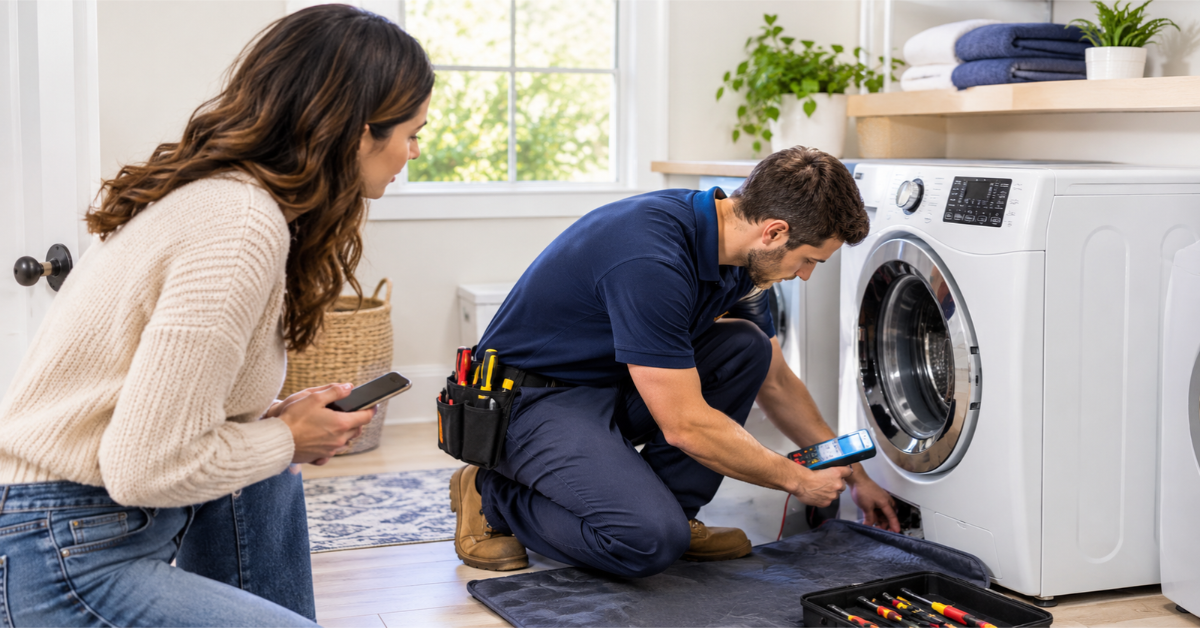
- Use a plug-in watt meter. This small device shows how much power a plug-in appliance uses. It works well for refrigerators and small appliances.
- Check run times. A fridge that never shuts off or a dryer that needs two cycles is a clue.
Refrigerator and Freezer
A fridge runs all day, so it's often the biggest hidden energy user.
- Dirty coils. Dust forces the compressor to work harder. Clean them once or twice a year. Our Use & Care Tips has simple steps.
- Worn door seals. Warm air leaks in, and the fridge keeps running to cool it.
- A temperature set too low. Colder than needed costs more.
- A hot location. A fridge next to an oven or in direct sun works harder.
- Poor airflow. Blocked vents and tight spacing hold heat in.
- A failing part. A weak fan, thermostat, or compressor makes the fridge run longer. See our refrigerator repair page.
Freezer Not Freezing Properly: What to Check First
Dryer
A dryer is one of the biggest energy users in a home.
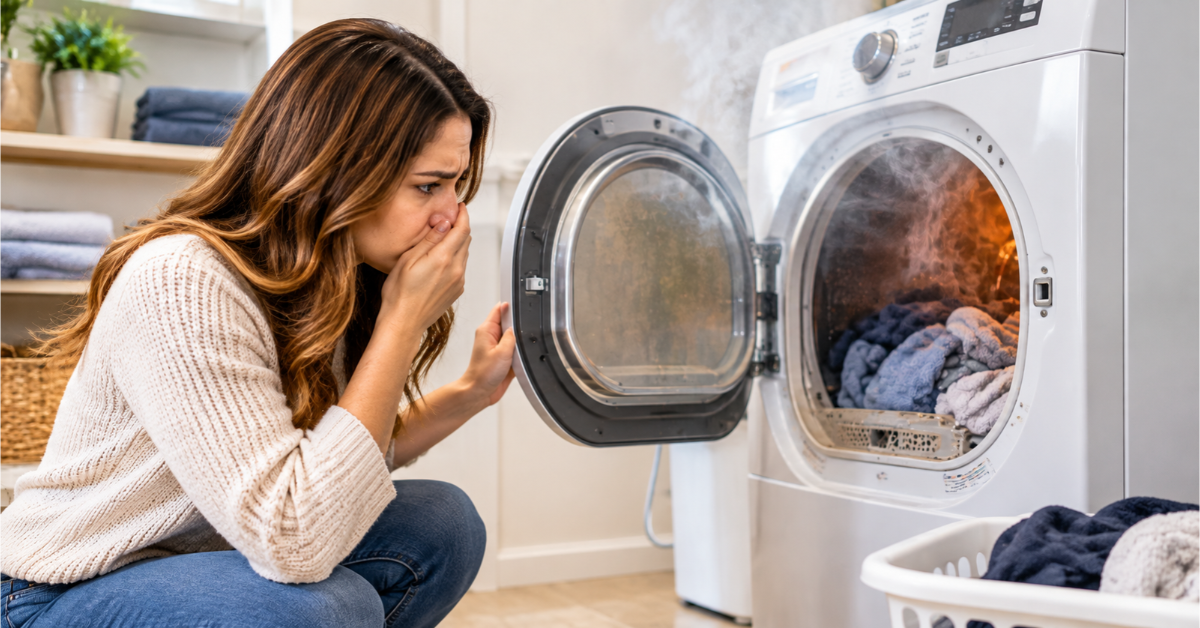
- A clogged vent. Hot air can't escape, so the cycle runs longer.
- A full lint screen. Same effect.
- A weak heating element. It heats slowly or unevenly.
- Overloading. Clothes can't tumble freely.
- Wet loads. Clothes that come out of the washer very wet need more drying time. A higher spin speed in the washer helps.
If you need help, see our dryer services.
Washing Machine
Most washer energy goes to heating water.
- Use cold water when you can.
- Run full loads.
- Check the water inlet for a stuck valve that keeps filling hot water.
- Choose the right cycle. Heavy-duty and sanitize cycles use more power.
- Make sure the machine is level. A shaky washer spins less efficiently.
Dishwasher
- The heated dry cycle. Turn it off and let dishes air-dry.
- A weak or failing heating element. It can run longer than needed.
- Running half-empty loads.
- Hot water settings. A water heater set very high adds up.
Oven and Range
- A worn door gasket. Heat leaks out.
- A faulty temperature sensor. The oven may overheat or run longer.
- Frequent door opening. Each peek drops the temperature.
- Preheating too long. Most dishes don't need extra preheat time.
Wolf Oven Error Codes: What They Mean
Standby Power
Many modern appliances stay powered on all the time. Displays, Wi-Fi, and clocks draw small amounts. Individually it's small, but across a home it adds up. Unplug rarely used appliances or use a power strip you can switch off.
Signs an Appliance Is Wasting Power
- It runs much longer than before
- It's noisy
- It feels hot to the touch
- It trips the breaker
- It takes more cycles to finish the job
- Your bills rise without another reason
Easy Ways to Cut Waste
- Clean coils, filters, and vents on schedule.
- Replace worn gaskets.
- Keep appliances away from heat sources.
- Run full loads.
- Use cold water and air-dry settings when possible.
- Repair failing parts early.
- Consider replacing very old units with efficient models.
Appliance Energy Use FAQs
Q: Which appliance uses the most electricity?
A: Usually the dryer, refrigerator, and oven. It depends on how often you use them.
Q: Why is my refrigerator using so much electricity?
A: Dirty coils, worn seals, a high setting, or a failing part can make it run longer.
Q: How can I tell if an appliance is using too much power?
A: Use a plug-in watt meter, and watch for longer run times and higher bills.
Q: Do old appliances use more energy?
A: Often yes. Older models are less efficient, and parts wear with age.
Q: Does unplugging appliances save money?
A: It can, especially for ones that stay in standby mode.
Final Thoughts on High Appliance Energy Use
When your bill jumps, don't guess. Track down the appliance that's working harder than it should. Start with the basics, like clean coils, clear vents, good seals, and smart settings. They fix more problems than you'd expect.
If an appliance runs longer, runs hotter, or sounds different, don't ignore it. A worn part wastes energy every day it stays in use, and repair is often cheaper than months of extra power costs.
Need help finding a local pro? Call (833) 220-1666 or contact us online. We connect you with independent contractors in your area.
You might also like
Educational Center